 Free shipping across USA
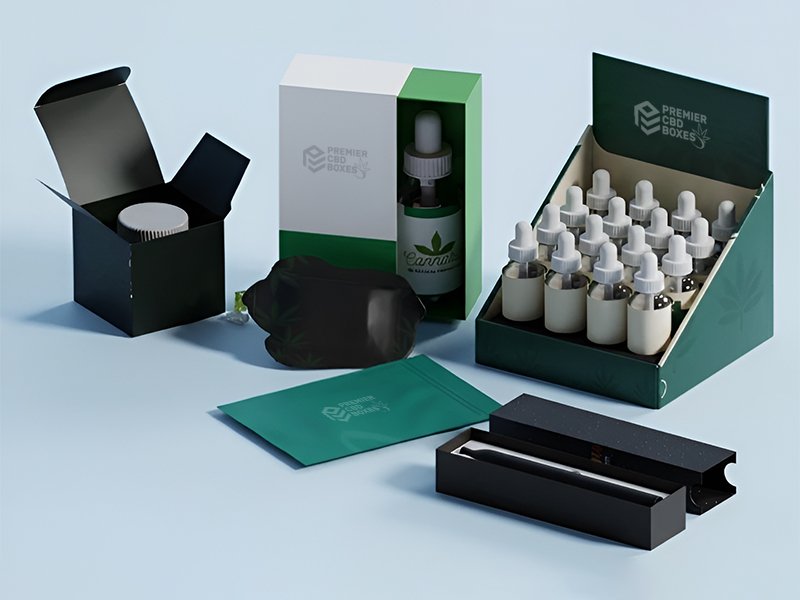
A Product-by-Product Guide to Paperboard and Mylar Options
You can’t let down your customer with poor packaging if they need CBD products.
CBD products are prone to degradation and other issues.
That’s why we have compliance standards in place.
And compliance practices tell us that product packaging should be suitable for every product type.
This blog will help you:
- Understand which packaging options should you choose for CBD products
- Why each packaging choice matters
- And how you can choose the right options
Let’s dive in and explore so your packaging functions as a proxy for quality
Why Your Packaging Choice Matters
CBD when exposed to heat, light, oxygen, and moisture degrade potency of products.
Controlled stability studies show CBD has a degradation half-life of approximately 1.77 days under accelerated oxidative stress conditions.
At room temperature, unprotected CBD solutions have been shown to lose up to 13% potency within 30 days, depending on light exposure.
When stored at 37°C for 30 days, degradation rates approach 20%, with photodegradation contributing an additional ~15% loss depending on exposure intensity.
And guess what? CBD Packaging becomes a primary line of defense against these variables and problems.
Moreover, FDA sampling studies reported to Congress between 2019 and 2022 found that approximately half of tested CBD products inaccurately reported THC content.
At the same time, state-level packaging regulations vary significantly. What is compliant in California may violate rules in Texas or Utah.
Many multi-state CBD brands adopt the strictest state-level packaging requirements—such as those in Indiana, Texas, and Utah—to reduce compliance risk across markets.
CBD packaging must accommodate:
- Child-resistant mechanisms
- Opacity requirements in youth-protection states
- Sufficient surface area for warnings, dosage, and traceability
Failure on any of these fronts can result in product removal or enforcement action.
Two Main Packaging Options You Need to Understand
There are two key types of main packaging options that you must know.
Paperboard Packaging
Rigid boxes, tuck boxes and sleeves are classified as paperboard. They are high quality, print properly, and exhibit a good sustainability. That renders them excellent in shelf attraction and brand narration.
Best for:
– Premium positioning
– Retail shelf impact
– Items that are already packed into protective containers (bottles, jars, and tubes).
Paperboard is not very protective against moisture, oxygen or light. Apply protection by using barrier coating or inner liners.
Mylar / boPET Packaging
Multilayer mylar (biaxially oriented PET) prevents the passage of moisture, oxygen, UV light and aromas much better than paperboard or unlined plastics. It is heat-sealed, so it can resist odors and remain economical at scale.
Best for:
– Direct product contact
– Smell‑sensitive products
– Controlled humidity storage.
– Child resistance compliance.
Compared to rigid boxes, flexible packaging is not as prestigious and does not offer as many high-end printing opportunities.
The Product-by-Product Breakdown
-
CBD Oils & Tinctures
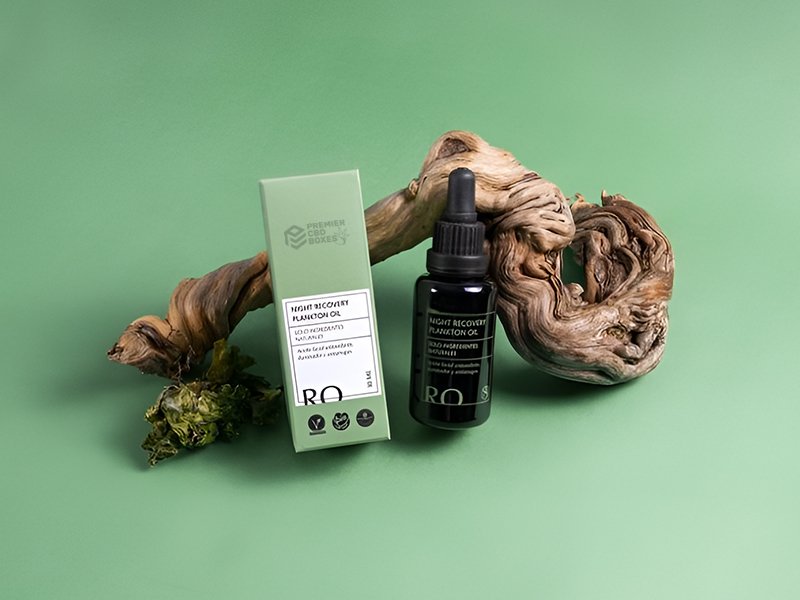
CBD oils are highly sensitive. Use opaque or amber bottles as UV protection. The outer packaging is made of paperboard, which cushions the glass and enhances retail appearance.
Suggestion: Paperboard exterior container + amber or non-transparent glass dropper bottle. This dictates that the outer packaging in youth-protection jurisdictions should not be transparent to show the main container.
Critical considerations:
Most states have child-resistant dropper caps.
– The warnings, dosage, and disclosure of THC should be provided in the outer packaging.
-
CBD Gummies & Edibles
Gummies are hygroscopic and sticky. Mylar comes with a moisture oxygen barrier; childproof zippers are used to make sure. The outer packaging is made of paperboard which provides the impression of value and room to provide nutrition information and warnings.
Suggestion: Child resistant Mylar stand-up pouch in a paper board box.
Critical considerations:
– Child-resistance is uncompromising.
– Opacities are popular with edibles.
-
CBD Topicals (Lotions, Creams, Balms)
Topicals are less sensitive to light and they are typically secure under their main storage.
Recommended: Jar and tube tuck box or sleeve made of paperboard.
Critical considerations:
– Jars and tubes must close.
– Demand for standards and aesthetics are high for skincare products
-
CBD Flower & Pre‑Rolls
Storage Industry storage recommends 55-62% RH to maintain terpene repertoires and prevent mold or drying. Mylar gives the required shield of moisture, oxygen, light, and odor.
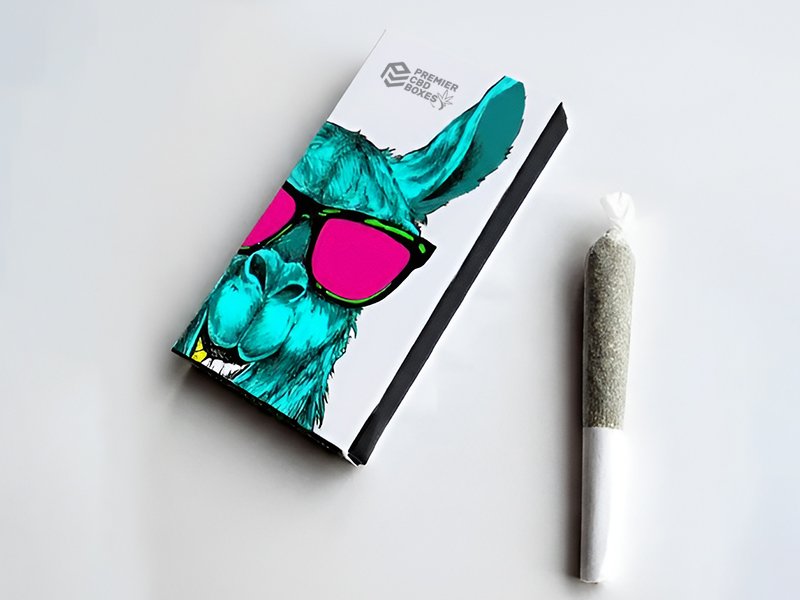
Recommended: Humidity controlled pack in mylar bag, optional in a paperboard box. Pre-rolls should also be shielded against crushing; common are rigid inserts or tubes.
Critical considerations:
– Odor control is essential.
– In most states, child-resistant flower packaging is required.
-
CBD Capsules & Softgels
Capsules and softgels are not resistant to moisture. Common HDPE pill containers do not give sufficient protection when used alone (not combined with Mylar or foil covers).
Preferred: Mylar -lined bottle or heat -sealed Mylar pouch within a paperboard box. A two-barrier solution is more shelf stable and indicates a pharmaceutical quality.
Critical considerations:
– Pill bottles that are child resistant are normally needed.
– The packaging must be safe and precise.
-
CBD Vape Products
Vape cartridges are delicate and require hard packaging in transportation. Paperboard boxes with custom inserts or padding do not break easily and make room to include a necessary health warning.
Suggested: Box of rigid paperboard with insert.
Critical considerations:
– There should be prominent warning labels.
Child -resistance is highly required.
– Vape products are limited or banned in some states, and therefore regulatory review must be performed prior to the launch.
Bottom Line
Know that there’s no hard and fast rule to selecting CBD packaging for different products.
It mostly depends on key elements like:
- Product type
- Regulatory compliance
- Cost
- And branding needs
If you are in doubt, partner with packaging suppliers who specialize in CBD and understand law and compliance.
The investment in proper packaging pays dividends in product stability, regulatory clearance, and customer trust.
Want to get a heads up? Partner with Premier CBD Boxes because we understand & care that packaging can be more than just paper or boxes.
References
FDA. Labelling of CBD Products: Guidance for Industry. U.S. Food and Drug Administration, 2022.
FDA. Child-Resistant Packaging Requirements for Cannabis Products. U.S. Food and Drug Administration, 2023.
Grotenhermen, F. Pharmacokinetics and pharmacodynamics of cannabinoids. Clinical Pharmacokinetics, 2003.
Holland, M., & Morales, P. Stability of CBD in different storage conditions. Journal of Cannabis Research, 2021.
Moss, M., & Li, Y. Effects of packaging on the shelf-life of CBD edibles. Cannabis Science and Technology, 2020.
State of California. Bureau of Cannabis Control: Packaging and Labeling Requirements, 2024.
State of Texas. Texas Department of State Health Services: Industrial Hemp Packaging Regulations, 2023.
UNCOVER Research. Child-resistant packaging in cannabis: Compliance and consumer behavior, 2022.